Fabrice Grinda

Musings of an Entrepreneur

Archives > Happiness

Happiness Summarized

As a supposed “expert on happiness” (try googling expert on happiness for fun), I am often asked to summarize what I have learned from the books and articles I have read and have written about. For all you lazy bums out there, here is the condensed version :)

Most people, through a combination of education and genes, have a set level of happiness. While circumstances may change that level, we usually revert back to our mean.

Despite that, there are 10 things you can do to improve your mean level of happiness. They sound artificial, but they work.

So the 10 things are:

1. Be grateful for what you have – as bad as you may think you have it, by the very fact you are reading this you are better off than 95% of the population of the world – if not more. You are likely healthy and have great opportunities. Try the following: every night before you go to sleep write down 3 good things that happened to you that day. It’s artificial but it works. You will sleep better and be happier.

2. Be optimistic. Even if slightly delusional, you will lead a happier life. Optimism breeds confidence.

3. Maintain a few close and meaningful friendships. We only exist to the extent that we exist in the eyes of the people we care about. Have acquaintances (after all we human are social animals). Invest the time you need to have deep friendships with your family, friends, etc.

4. Minimize your commute. It’s a variable out of your control (traffic, strikes, etc.) and it can take time away from personal time and/or work. If you do commute, use it as an opportunity to indulge your interests, for example listen to NPR, read the economist, learn a language … sing.

5. Give your body the sleep it needs: you will function better, think better, be happier. Of note: some sleep studies suggest people feel better rested when they wake up at the same time every morning.

6. Have dreams and aspirations. It’s the journey that matters, not the destination. Dreams provide direction. They can be as big or small as you want. If you achieve them, get new ones.

7. Don’t confuse money with happiness. Contrary to popular belief, we adjust very well to a lower standard of living. However, as we adapt to our current comfort level we may become materialistic and more risk adverse. Money is like pancakes – one tenth of a pancake leaves you starving, but after 4 or 5 you do not crave more.

8. Find love – from your puppies, friends, family, and/or significant other.

9. Exercise a lot: the adrenaline, endorphins and opiates released are great for you.

10. Have lots of sex. You will be happier for longer than you anticipate. Happiness extends beyond the coital period to the next day.

One last point: You might think that being happy makes you smile but reverse causality holds too: smiling makes you happy. Individuals receiving botox report improvements in self esteem, and happiness. Because they cannot frown- even subconsciously, they are perceived differently by others and unlearn frowning for months beyond the effect of the drug.

That’s it :) It’s now in your hands so go ahead and be happy!

Cognitive Behavioral Therapy (CBT): Positive Psychology in Action

The advent of positive psychology, as mentioned in my recent posts on happiness, is leading to a revolution in psychological counseling. As depression, anxiety and other ills seem to be largely caused by negative thoughts, psychologists have turned to cognitive behavioral therapy to teach patients how to focus on the positive and prevent negative thoughts from creeping into their minds.

Even better, patients rapidly show dramatic improvement and sessions typically end after 10 to 25 visits. CBT has been shown to work, often better than drugs, for depression, anxiety, insomnia and hypochondria. It seems to quell insomnia better than Ambien over the long term. It is as effective as Paxil for moderate to severe depression. Moreover, only 31% of CBT patients had a relapse versus 76% who stopped taking Paxil.

The April 9 issue of Forbes had a great cover on CBT. You can read the full article at: http://members.forbes.com/forbes/2007/0409/080.html

Happiness and the dangers of belief in the written word :)

It’s interesting how gullible we humans are. If we read something or watch it in a documentary, we are more likely to believe it. Then there is the magic of Google. If you write enough on a topic, you start showing up in search results on the topic – regardless of how much you really know. Soon enough someone comes along taking you for an expert in the field and asks to interview you.

And so I was pleasantly surprised to be mistaken for an “International Expert on Happiness” and asked to answer a few questions. I started by telling my interviewer that she was up for a big disappointment if she thought I was an expert on happiness, but decided to play along.

I reproduce some of my answers below for your reading pleasure :)

How would you define happiness?

Happiness is an emotional or affective state that is characterized by feelings of enjoyment and satisfaction. As such, like being in love, you are either happy or not, but don’t necessarily know why – you just are. As a result, many people define happiness as things they do or have, as Charlie Brown does below:

HAPPINESS
From You’re a Good Man, Charlie Brown
(Clark Gesner)

Happiness is finding a pencil.
Sleeping in moon light.
Telling the time.
Happiness is learning to whistle.
Tying your shoe
For the very first time.
Happiness is playing the drum
In your own school band.
And happiness is walking hand in hand.

Happiness is two kinds of ice cream.
Knowing a secret.
Climbing a tree.
Happiness is five different crayons.
Catching a firefly.
Setting him free.
And happiness is being alone every now and then.
And happiness is coming home again.

Happiness is morning and evening,
Daytime and nighttime too.
For happiness is anyone and anything at all
That’s loved by you.

Happiness is having a sister.
Sharing a sandwich.
Getting along.
Happiness is singing together
When day is through,
And happiness is those who sing with you.

Happiness is morning and evening,
Daytime and nighttime too.
For happiness is anyone and anything at all
That’s loved by you.

However, while doing those things makes Charlie Brown happy – sometimes – they may not work for you.

What do you consider to be an important step toward happiness?

Despite what I said above there are clear deliberate steps you can take towards being happy.

Specifically:

  1. Don’t equate happiness with money.
  2. Don’t commute.
  3. Exercise regularly.
  4. Have lots of sex.
  5. Devote time and effort to close relationships.
  6. Pause for reflection, meditate on the good things in life (in other words be grateful).
  7. Seek work that engages your skills, look to enjoy your job.
  8. Give your body the sleep it needs.
  9. Don’t pursue happiness for its own sake, enjoy the moment.
  10. Take control of your life, set yourself achievable goals (in other words have goals).
  11. Have an optimistic attitude and outlook on life.

You might argue that things like “being grateful” are not easy to do, but even something as artificial as writing three good things that happened to you today in a notebook every day has been proven to work extremely well!

Do you believe it is possible for an individual to be truly content most of the time?

Absolutely! Many people are generally happy just because – based on a combination of their upbringing and genes. However, even if by default you were only of average happiness, you can take the 11 deliberate steps mentioned above to make you significantly happier.

Non-sequiturish conclusion: The average academic journal article is read by 7 people, including the author’s mom. Maybe the real experts should be writing blogs :)

The Science of Happiness

I recently came across an interesting article on the science of happiness in Harvard Magazine recounting the emergence of “positive psychology” as a field of study, its findings and the emergence of new research areas such as the study of joy instead of happiness.

Many of the findings will be familiar to the readers of my previous posts on happiness. However, a few of the research results were surprising such as the fact that having kids tends to slightly decrease happiness.

Here are two interesting paragraphs:

“Nobel Prize-winning psychologist and behavioral economist Daniel Kahneman of Princeton (see “The Marketplace of Perceptions,” March-April 2006, page 50) asked thousands of subjects to keep diaries of episodes during a day—including feelings, activities, companions, and places—and then identified some correlates of happiness. “Commuting to work was way down there—people are in a terrible mood when they commute,” Etcoff says. “Sleep has an enormous effect. If you don’t sleep well, you feel bad. TV watching is just OK, and time spent with the kids is actually low on the mood chart.” Having intimate relations topped the list of positives, followed by socializing—testimony to how important the “need to belong” is to human satisfaction.”

.
.
.

“Gilbert reconsiders his grandmother’s advice on how to live happily ever after: “Find a nice girl, have children, settle down.” Research shows, he says, that the first idea works: married people are happier, healthier, live longer, are richer per capita, and have more sex than single people. But having children “has only a small effect on happiness, and it is a negative one,” he explains. “People report being least happy when their children are toddlers and adolescents, the ages when kids require the most from the parents.” As far as settling down to make a living—well, if money moves you into the middle class, buying food, warmth, and dental treatment—yes, it makes you happier. “The difference between an annual income of $5,000 and one of $50,000 is dramatic,” Gilbert says. “But going from $50,000 to $50 million will not dramatically affect happiness. It’s like eating pancakes: the first one is delicious, the second one is good, the third OK. By the fifth pancake, you’re at a point where an infinite number more pancakes will not satisfy you to any greater degree. But no one stops earning money or striving for more money after they reach $50,000.”

Read the full article at: http://www.harvardmagazine.com/on-line/010783.html

Speaking of happiness…

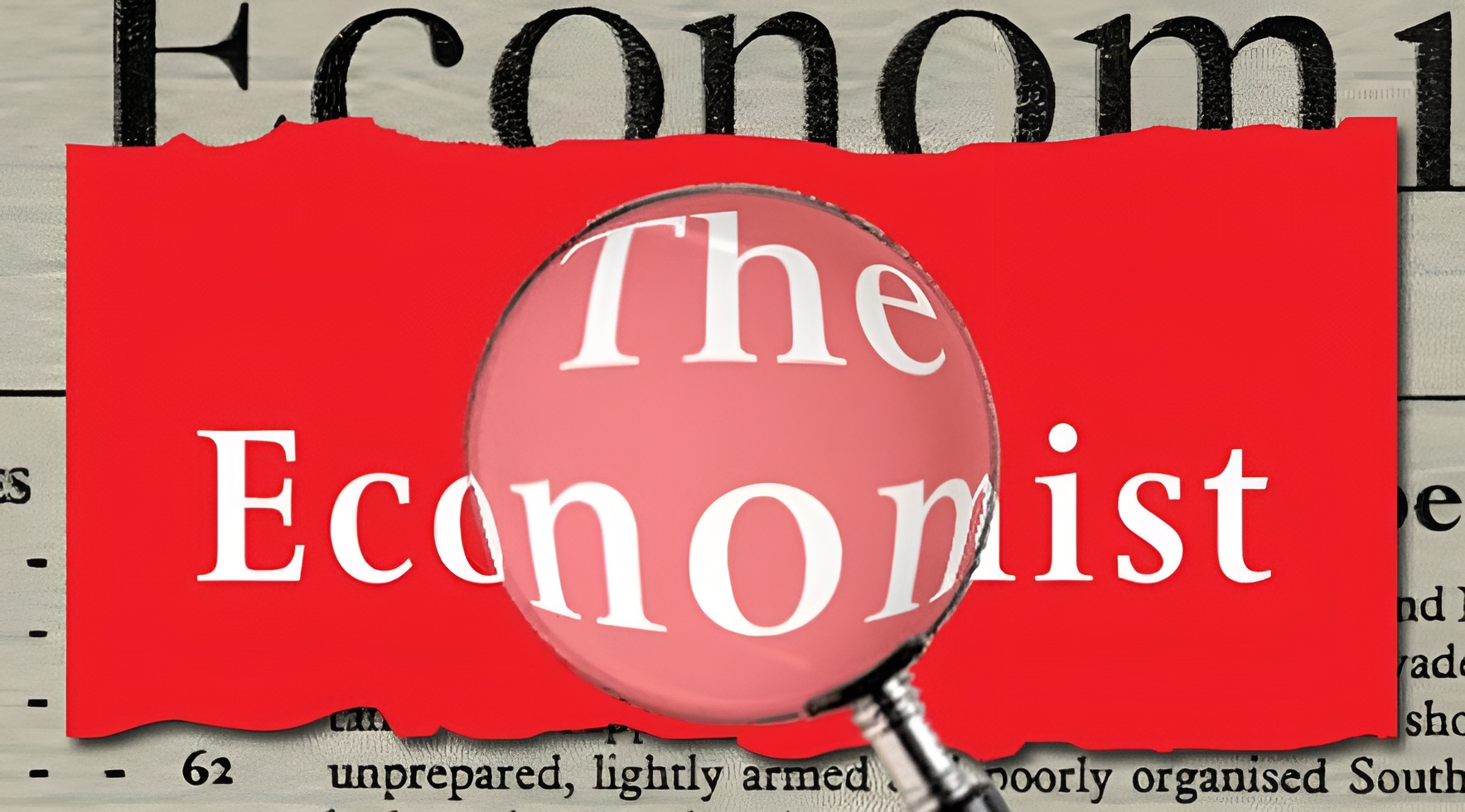
Check out the cover of the latest Economist :) I can’t wait to read it :)

The Pursuit of Happiness: six experts tell what they’ve done to achieve it

I came across the following article in the Wall Street Journal last week. Many of the themes and experts will be familiar to readers of my previous posts on happiness (hedonic adaptation, Alan Krueger, etc.) but I thought it was interesting nonetheless.

“Yes, money can buy happiness. But you have to spend it with care.

Take your dad to the Super Bowl. Buy a home near the office. Get married. Go out to dinner with the family. Take a memorable vacation, and be sure to buy souvenirs.

Where does this advice come from? I talked to half-a-dozen academics who specialize in “happiness research” — and asked what changes they had made in their own lives.

• Relishing the day. Possibly the biggest obstacle to greater happiness is so-called hedonic adaptation. Sure, you are thrilled when you first get promoted or get a pay raise. But soon enough, the thrill fades and you are lusting after something else.

“When something good happens, you want to find a way to hold on to it for longer,” says David Schkade, a management professor at the University of California at San Diego. For instance, you might go out to dinner to celebrate even modest career accomplishments. Similarly, you should purchase souvenirs or take photos when you’re on vacation, so you remember the trip for longer.

Prof. Schkade tries to follow his own advice. As an undergraduate, he attended the University of Texas at Austin. When the Longhorns won the national championship in January at the Rose Bowl, he bought T-shirts that marked the occasion, so he wouldn’t quickly forget the team’s victory.

“You have to combat adaptation,” Prof. Schkade says. “You want to celebrate the small things, not just the big ones. If you save all your celebrations for getting married or becoming vice president, you won’t celebrate very much.”

• Dodging traffic. Studies have found that commuting ranks as one of life’s least enjoyable activities. The reason: While folks often adapt to changes in their lives, both good and bad, it’s tough to adapt to commuting, because you can never be sure how much traffic you’ll hit.

“Lack of control is what tends to induce stress in human beings,” notes Andrew Oswald, an economics professor at England’s Warwick University. “It made me re-evaluate whether I should be a long-distance commuter.” A few years ago, Prof. Oswald moved closer to his office, slashing his commuting time from 60 to 20 minutes.

• Seeing friends. If commuting makes people so unhappy, why do they take jobs or buy homes that will mean a long commute? Folks rely on their initial reaction — and, at first, the long commute may not seem so bad. “People don’t think about how things will play out over time,” says Cornell University economics professor Robert Frank.

Suppose you have the chance to take a higher-paying job that will leave you with less time for socializing. At first blush, that might strike you as a reasonable trade-off. But in all likelihood, you will quickly take the larger salary for granted.

Meanwhile, you’ll miss out on seeing friends and family, which surveys suggest are among our happiest times. “Earlier on, I tended to sacrifice my family time to try and push research ahead,” recalls Richard Easterlin, an economics professor at the University of Southern California. “I do that much less now. Going out to dinner with family for me is always an enjoyable experience.”

• Buying memories. Some folks are inherently less happy and some more so, and this basic temperament seems to be remarkably enduring.

Nonetheless, you may be able to boost your level of happiness by thinking carefully about how you spend your time, says Princeton University economics professor Alan Krueger. On that score, try “buying memorable experiences,” he suggests.

As an example, Prof. Krueger cites taking his father to the 2001 Super Bowl, which pitted the New York Giants against the Baltimore Ravens. “I got a lot of mileage out of that,” he says. “I had the anticipation of the game, as well as the game itself. I framed my ticket, which reminds me of the trip.” Still, he adds, “it would have been better had the Giants won.”

Limiting options. Having lots of choice might seem like a good thing. But in fact, it can lead to unhappiness.

Consider a study conducted by professors Jane Ebert and Daniel Gilbert. Participants were allowed to choose an art poster to take home. Some were told that, if they didn’t like the poster, they could exchange it for another. Others were told their decision was final.

“Who was happiest with their choice?” asks Prof. Gilbert of Harvard University. “Those for whom the choice was irrevocable. When options are open, the mind generates debate. When options are closed, the mind generates satisfaction.”
This insight spurred Prof. Gilbert to limit his own choices. “It made me realize that I ought to propose to my girlfriend,” he says. “Sure enough, now that she’s my wife, I’m happier.”

The Psychology of Happiness – Part 2

A few months ago I blogged about the Psychology of Happiness (www.fabricegrinda.com/?p=78) which showed that empirical evidence suggested that most people have a mean level of happiness they rarely deviate from and that beyond a minimal level changes in financial circumstances had very little impact on happiness due to “hedonic adaptation.” The article went on to suggest several ways of systematically improving happiness.

Recent research of two Princeton professors, Alan Krueger (who was my labor economics professor at Princeton) and Daniel Kahneman further support this theory. Their paper, published in the June 30 issue of Science, shows that while people with above-average income say they are generally satisfied with their lives, the correlation is weakened when happiness is measured from moment to moment. The ways in which people with high incomes spend their time tend to make them more tense and stressed than their less-affluent counterparts.

Their study suggests that how one uses one’s time plays an important role in personal well-being. One of their studies asked 900 women to record a diary of how they used their time in a given day and how they felt during each activity. The activities when listed in order of happiness were intuitively rational: socializing, relaxing praying and eating were at the top of the list, while commuting, working and doing housework were at the bottom.

Small non-sequitur for the skeptics among you: historically economists were wary of subjective well being data because only the person reporting his or her response can verify accuracy. Moreover cultural factors may be at play – in the U.S. most people will answer yes to general questions like “are you happy?” However, asking specific time based question “does this activity make you happy” seemingly leads to accurate reporting as showed by positive correlation between the reports of happiness and physiological factors such as brain activity or the level of cortisol, a stress hormone. (Happy people tend to have more of the former and less of the latter).

The Psychology of Happiness

I recently came across an amazing article on happiness. It is well researched, written and presented. Interestingly, maybe even ironically, it is written by analysts at an investment bank!

They find that most people have a mean level of happiness that is largely genetic and hard to deviate from as people quickly assimilate any changes in their life circumstances – a process called “hedonic adaptation.”

However, they do find 9 ways to systematically improve happiness (in no particular order):

1. Don’t equate happiness with money.
2. Exercise regularly.
3. Have sex.
4. Devote time and effort to close relationships.
5. Pause for reflection, meditate on the good things in life.
6. Seek work that engages your skills, look to enjoy your job.
7. Give your body the sleep it needs.
8. Don’t pursue happiness for its own sake, enjoy the moment.
9. Take control of your life, set yourself achievable goals.

You can download the entire article here.

« Previous Page